What Is Digital Marketing? A Beginner-Friendly Guide to How Digital Marketing Works
Imagine you finally open a small home bakery in Thalassery, Kerala. You bake delicious cakes, but on your first day only two people walk in — your neighbor and your cousin. You have two ways to spread the word. Option one: Print 5,000 flyers and hand them out at the bus stand. You may reach a lot of people, but most will throw them away. You will never know how many read it, how many visited because of it, or whether the money was worth it. Option two: Post a mouth-watering photo of your cake on Instagram, add a location tag, and run a ₹500 ad targeting people within 10 km who love baking and desserts. Within hours, you can see exactly how many people saw the post, clicked, and messaged you. That second option is digital marketing. Digital marketing meaning is simple: promoting a business, product, or service using the internet, smartphones, search engines, social media, email, and other digital channels. Unlike shouting in a crowded street, it lets you find the right people, talk to them directly, and measure what works. For small business owners, students, job seekers, and fresh graduates, digital marketing is one of the most practical skills you can learn today. It does not require a fancy degree or a big office. It requires curiosity, consistency, and a willingness to learn from real data.
A Simple Real-World Example
Let us make this even more relatable. Meet Riya, who sells handmade jewellery in Kannur. Six months ago she only had a WhatsApp number. She would send photos to 30 friends and hope someone bought. Sales were slow.
Then she started learning digital marketing for beginners. She created an Instagram page, posted reels showing how she made each piece, and added a WhatsApp link in her bio. She also started a simple blog about jewellery care tips. When people searched Google for “handmade jewellery in Kannur,” her blog began to appear.
Within three months, she was receiving 10–15 orders a week through Instagram and WhatsApp. Her total cost was almost zero except for her time and a few boosted posts.
That is the power of digital marketing. It turns a one-person home business into a brand that can reach thousands. Riya’s story is not magic. It is a combination of content, social media, search, and messaging — the same tools you will learn in this guide.
Traditional Marketing vs Digital Marketing
Before you dive in, it helps to understand how digital marketing differs from the old way. Traditional marketing uses offline channels: newspapers, TV, radio, billboards, flyers, and posters. These methods can reach a lot of people quickly, but they have limits. They are expensive, hard to measure, and mostly one-way. You put the message out and hope it works.
Digital marketing uses online channels. It is targeted: you can show ads to people based on age, location, interests, and behavior. It is measurable: you can see exactly how many people saw, clicked, bought, or shared. It is cost-effective: a small budget can still bring results. It is interactive: customers can reply, comment, share, and ask questions instantly. It is also global or local: you can reach a village near Thalassery or customers in another country.
Example: A ₹10,000 newspaper ad reaches everyone who reads the paper, but only a few may care. A ₹10,000 Meta Ads campaign can reach people who already searched for similar products, and you can track every click.
This does not mean traditional marketing is dead. It means digital marketing gives small players a fair chance to compete.
How Digital Marketing Works
Think of digital marketing like a simple loop. First, you figure out who your ideal customer is. A college student looking for internships? A housewife starting a boutique? A restaurant owner in Thalassery? The clearer your audience, the better your results.
Then you pick the best channels. A B2B software company might use LinkedIn and Google Ads. A fashion brand might use Instagram and influencer marketing. A local salon might use WhatsApp and Google Business Profile.
Next, you create content. It can be a blog post, a reel, an ad, an email, or a WhatsApp message. Good content answers a question, solves a problem, or makes someone smile.
Then you bring people to your content through organic reach, paid ads, or SEO. Once they land, you guide them to take action — buy, sign up, call, or message.
Finally, you measure. Did 100 people visit but nobody bought? Maybe your price is too high or your website is confusing. Digital marketing lets you fix that fast.
This is how digital marketing works: plan, publish, attract, convert, and repeat.
Major Types of Digital Marketing (With Examples)
There are many ways to do digital marketing. You do not need all of them. Most businesses start with two or three channels and expand later. Here are the major areas you should know.
SEO — Search Engine Optimization
SEO means making your website or content appear on Google when people search for related keywords. Example: If someone searches “best digital marketer in Thalassery,” and my website appears first, that is SEO at work. You do this by using the right keywords, writing helpful content, making your site fast, and getting links from other websites. SEO is free in terms of clicks, but it takes time and patience.
Content Marketing
Content marketing is creating valuable content — blogs, videos, reels, podcasts, infographics — to attract people without directly selling. Example: A skincare brand writes articles like “How to choose a face wash for oily skin.” People searching for that answer find the article, trust the brand, and later buy the product.
Google Ads / PPC
PPC means Pay Per Click. You run ads on Google or other platforms and pay only when someone clicks. Example: A plumbing business in Kannur runs a Google ad for “plumber near me.” When someone searches that, the ad appears at the top. The business pays only when the customer clicks.
Email Marketing
Email marketing is sending useful emails to people who have already shown interest. Example: An online course sends a 7-day free email series with tips. On day 7, it offers a paid course. People who stayed subscribed are warm leads.
Affiliate Marketing
You promote someone else’s product and earn a commission for every sale. Example: A tech blogger reviews headphones and includes an Amazon affiliate link. When a reader buys through that link, the blogger earns a small percentage.
Influencer Marketing
You partner with people who already have an audience that trusts them. Example: A new restaurant in Thalassery invites local food bloggers to try the menu. Their Instagram stories bring in hundreds of curious customers.
WhatsApp Marketing
This is using WhatsApp Business to send updates, answer queries, and share catalogs. Example: A boutique sends a new arrival message to 200 saved customers. Within hours, 30 people reply and 10 place orders.
Who Can Learn Digital Marketing?
Almost anyone. You do not need to be a tech genius. Students who want a part-time skill or freelance income can start. Fresh graduates looking for a job can build a portfolio instead of waiting for campus placements. Small business owners who want more customers can run their own campaigns. Homemakers starting a home business, shopkeepers moving online, and people changing careers can all benefit.
If you can use a smartphone and browse the internet, you can start learning digital marketing. The best professionals started exactly where you are now.
Do You Need to Know Coding?
No, you do not need to be a coder. Most digital marketing work happens in dashboards, content editors, and ad managers. You will click more than you code.
However, a little basic knowledge helps. Understanding HTML helps you edit blog posts and email templates. Knowing how to install tracking pixels helps you measure ad results. Using analytics tools helps you make better decisions.
You can learn these basics in a few days. Do not let the fear of coding stop you from starting.
Career Opportunities in Digital Marketing
The digital marketing career path is wide. Some roles include SEO Specialist, Social Media Manager, Content Writer or Strategist, PPC and Google Ads Expert, Email Marketing Specialist, Affiliate Marketer, Influencer Marketing Manager, Digital Marketing Manager, and Freelance Consultant.
You can work in an agency, in a company, or on your own. Many beginners start freelancing after three to six months of practice. In Kerala, small businesses, restaurants, boutiques, tuition centers, and clinics all need digital help.
Beginner Mistakes to Avoid
Trying to master everything at once. Start with one channel and grow from there. Ignoring data. If you do not track results, you are guessing. Copying big brands without their budget. Start small and test. Posting once and disappearing. Consistency beats perfection. Buying followers. Fake numbers do not buy products. Ignoring mobile. Most people in India browse on their phones, so your content must look good on small screens.
A Simple Beginner Roadmap
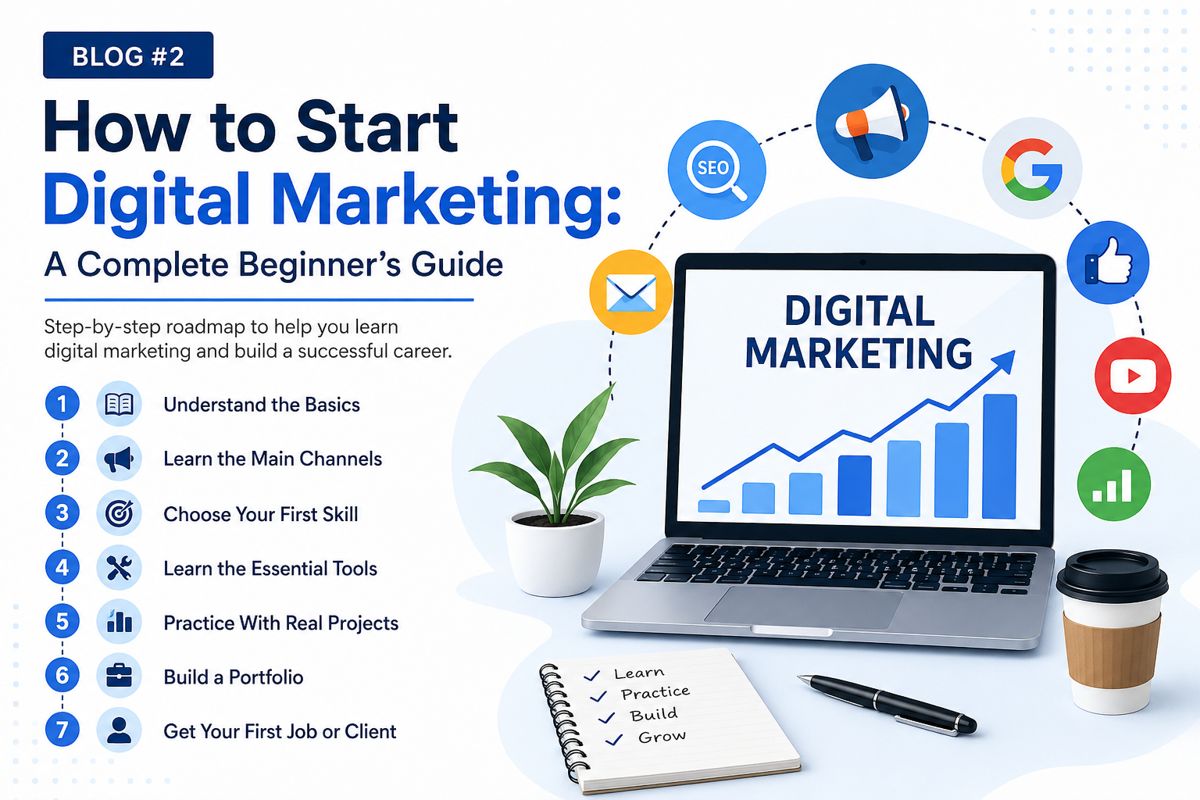
Week one to two: learn the basics. Understand terms like SEO, PPC, CTR, and conversion. Week three to four: pick one channel. Instagram, SEO, or Google Ads. Week five to eight: practice on a real project. Create a page, run a small ad, or write five blog posts. Month three: learn free tools like Google Analytics, Canva, Meta Business Suite, and Ubersuggest. Month four: build a portfolio. Document what you did and the results. Month six: apply for jobs, freelance, or offer services to local businesses.
Suggested Next Reads
Digital Marketing Services
See the SEO, Meta Ads, social media, and design services I offer in Thalassery.
Portfolio & Work
Explore real projects and campaign results from my portfolio.
Digital Marketer in Thalassery
A local SEO landing page for businesses in Thalassery, Kerala.
Contact Me
Have questions? Let's talk on WhatsApp or email.
Frequently Asked Questions
What is digital marketing in simple words?+
Promoting a business using the internet and digital devices to reach the right people and measure results.
Is digital marketing easy for beginners?+
The basics are easy to understand. Becoming good requires practice, like any skill.
Can I learn digital marketing without a degree?+
Yes. Most employers and clients care more about your skills and results than your degree.
How long does it take to learn digital marketing?+
You can learn basics in one to two months. To become job-ready, plan three to six months of consistent practice.
Does digital marketing require coding?+
No. Basic HTML and analytics knowledge helps, but most work does not require programming.
Is digital marketing a good career in Kerala?+
Yes. Businesses across Kerala need people who can run ads, manage social media, and rank websites.
Need help growing your business?
I'm Muhammed Sanal — a freelance digital marketer in Thalassery helping brands grow with SEO, Meta Ads, and social media.
Related articles
Comments
Comments are moderated. Have thoughts on this article? Message me on WhatsApp or email — I read every one.
Social Media Marketing
This is using platforms like Instagram, Facebook, LinkedIn, and Twitter to build your brand and connect with customers. Example: A gym in Thalassery posts daily workout tips, before-and-after stories, and reels of trainers. Over time, people start trusting the brand and signing up for memberships.